
Cabin Kits: Shell, Log, A-Frame, and Prefab Prices (2026)
Cabin kits run from $5,000 garden shells to $80,000 log and A-frame kits in 2026. The four kit types, what each includes, and how they compare to a barn home.
Building cost estimator
Type, size, floor, doors, insulation, finish level, and state in. An itemized low-to-high budget out, with four building types priced side by side.
Cabin kits sell on a single attractive number, the kit price, and that number leaves out most of what a finished cabin costs. The market also lumps four very different products under one name, from a $5,000 backyard shell to a prefab cabin delivered nearly move-in ready. This page sorts the types, prices each, and compares a small cabin against the pole barn and barndominium homes this site covers.
What are cabin kits?
Cabin kits are pre-engineered building packages for small cabins, delivered as materials you or a crew assemble. They range from molded or panel shells for a backyard studio to full milled log packages for a vacation home. What they share is that they are shells: the structure and exterior, not a finished, serviced dwelling.
The appeal is a fixed materials price and a faster build than custom construction. The limit is that the kit is the start of the budget, not the end. For a larger rural home, the pole barn house and barndominium kits guides cover barn-style alternatives that give more space per dollar.
What are the four types of cabin kit?
Cabin kits fall into four types, and the price per square foot climbs as the kit does more of the work for you.
| Type | What it is | Example sellers | 2026 price band |
|---|---|---|---|
| Shell and bunkie kits | Small studio or sleeping shells | Allwood garden kits, home centers | $5,000 to $20,000 |
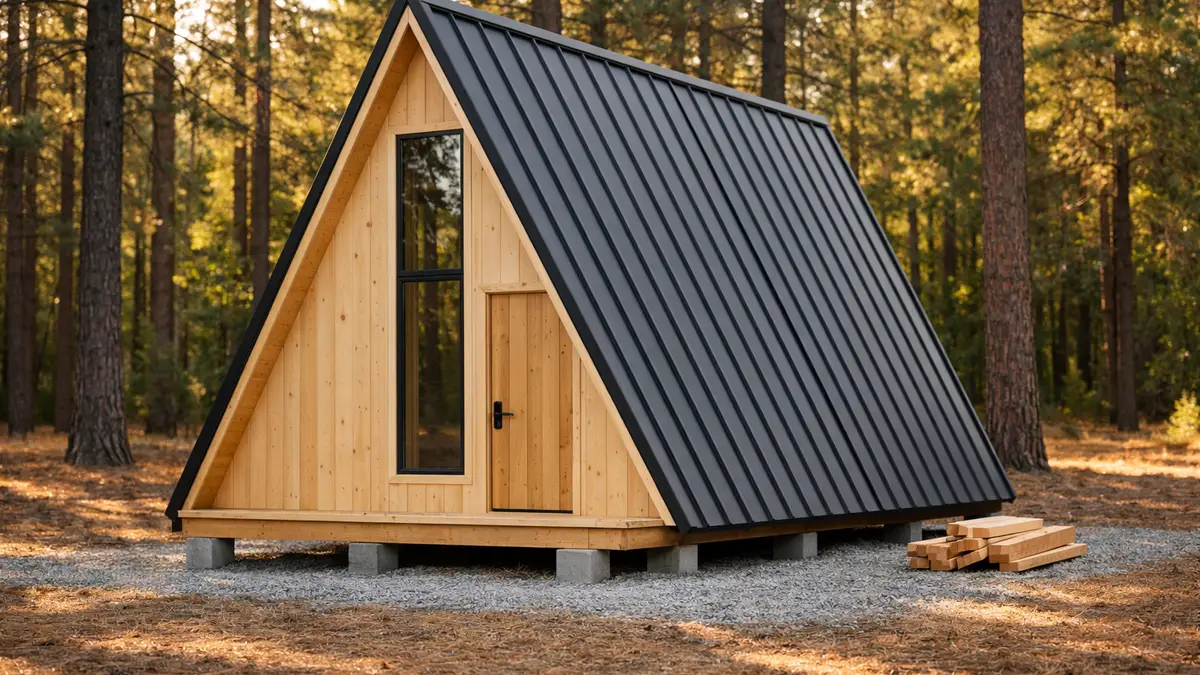
| Panelized A-frame kits | Flat-pack wall and roof panels | Allwood A-frame, Avrame | $20,000 to $60,000 |
| Milled log cabin kits | Precut logs and roof package | Conestoga Log Cabins, EZ Log | $50 to $80 per sq ft (materials) |
| Prefab modular cabins | Delivered mostly finished | Regional modular builders | $100 per sq ft and up |
Allwood sells flat-pack garden and A-frame kits with the wall and roof components and plans; log sellers like Conestoga precut the logs and ship a package you stack. Prefab modular cabins arrive on a truck largely finished, which costs more but cuts site labor.
What does a cabin kit include and exclude?
A cabin kit includes the shell and excludes almost everything that makes it livable. The specifics vary by seller, so read each inclusion list, but the pattern holds.
| Usually included | Usually excluded |
|---|---|
| Wall and roof structure | Foundation and site work |
| Exterior cladding or logs | Insulation (varies) |
| Many kits: windows and doors | Plumbing and fixtures |
| Assembly plans | Electrical and lighting |
| Fasteners and hardware | HVAC |
| Interior finish and cabinets | |
| Delivery (sometimes) |
Insulation is the inconsistent line: some panelized kits include it, many log and shell kits do not. The excluded items often match or exceed the kit price, which is why a finished cabin costs far more than the advertised kit.
What does a finished cabin really cost?
Plan on the kit being a third to a half of the finished cost on a serviced lot, and less on a remote one. A $30,000 log kit can become a $90,000 to $150,000 finished cabin once the foundation, utilities, and interior are in, depending on size and finish.
The biggest wildcards are the ones no kit covers: a well and septic, a power run, and the access road on a rural lot. These are site costs, not kit costs, and they can rival the house on an off-grid parcel. The barndominium cost guide breaks down the same shell-versus-finished gap for barn-style homes.
Can you live in a cabin kit full-time?
Yes, if it is code-built, insulated, and permanently serviced, but many kits are not sold for that. Small shell and recreational kits are often marketed as seasonal or accessory structures and are not engineered or permitted as full-time dwellings as delivered.
For full-time living, confirm with your building department that the kit can be permitted as a dwelling at your address, with the required insulation, egress, and energy code compliance. A shop house or pole barn home is often an easier path to a code-built full-time residence on rural land.
Is a cabin kit the right choice versus a barn home?
A small cabin kit is cheaper up front and suits a weekend cabin, a guest unit, or a tiny footprint. A barn-style home wins on space per dollar and on being a single code-built residence once you need real square footage.
| Option | Best for | Space per dollar |
|---|---|---|
| Small cabin kit | Weekend, guest, or tiny home | Lower at larger sizes |
| Pole barn home | Rural full-time home with a shop | High |
| Barndominium | Open-plan home in a steel or post-frame shell | High |
If the goal is a full-size rural home, compare a cabin kit honestly against what a barndominium is before you commit; the barn methods usually deliver more finished space for the money above about 1,200 sq ft.
What foundation does a cabin kit need?
A cabin kit needs a foundation you build first, because kits are shells with no footings. The choice depends on the ground, the climate, and whether the cabin is seasonal or full-time.
| Foundation | Best for | Rough cost |
|---|---|---|
| Gravel pad and piers | Small seasonal cabins, sloping lots | Lowest |
| Concrete piers or sonotubes | Cabins in frost country | Low to middle |
| Crawlspace | Full-time cabins, utility access | Middle |
| Slab on grade | Flat lots, heated cabins | Middle to high |
Frost depth drives the choice in cold climates: footings have to reach below the frost line or sit on a frost-protected design, or the cabin heaves. On a remote lot, the foundation and the site work to reach it can cost as much as the kit, which is why the kit price alone never tells the real story.
How long does a cabin kit take to build?
A prefab modular cabin arrives in days and is set in one; a flat-pack or log kit takes weeks of owner labor. The timeline tracks how much the factory did for you.
A small panelized A-frame kit goes up in a few weekends with a couple of helpers once the foundation is ready. A milled log kit takes longer, because stacking and sealing the logs is slow work. A prefab modular cabin is the fastest on site but the slowest to order, since it is built in a factory queue before delivery. Add the foundation, the utility hookups, and the interior finish to any of these, and the move-in date is months out, not days, on all but the simplest shells.
Who should not buy a cabin kit?
A cabin kit is the wrong tool in several cases.
- Buyers who want a turnkey price. Kits are shells; the finished cost is much higher and site-dependent.
- Full-time homes at larger sizes. A pole barn home or barndominium gives more code-built space per dollar.
- Remote off-grid lots on a tight budget. The well, septic, power, and road can cost more than the cabin.
- Readers outside the US. Sellers, prices, and codes here are US; packages and rules differ abroad.
Price bands and sellers were read in October 2026 and change with lumber and log markets. Get each seller’s full inclusion list and a site cost estimate before you compare kit prices.
Frequently asked questions
Quick answers to what buyers and builders ask us most
How much does a cabin kit cost?
A small garden or bunkie shell kit starts around $5,000. Panelized A-frame kits from Allwood run about $20,000 to $60,000 for the materials package. Milled log cabin kits run about $50 to $80 per sq ft in materials. Prefab modular cabins delivered mostly finished cost more, often $100 per sq ft and up.
What is included in a cabin kit?
Usually the shell: wall and roof materials, often windows and doors, and assembly plans. Panelized and log kits include the structure and exterior; interior finish, insulation, plumbing, electrical, HVAC, the foundation, and delivery are typically extra. Read each seller's inclusion list, because they vary widely.
Can you live in a cabin kit full-time?
Yes, if it is built to the residential code for your area, insulated, and fitted with permanent utilities. Many small kits are sold as recreational or seasonal structures and are not code-built for full-time living as delivered. Confirm the kit can be permitted as a dwelling before you buy for that use.
Is a cabin kit cheaper than a pole barn home or barndominium?
A small cabin kit is cheaper up front because it is smaller and simpler. Per square foot, a finished cabin is not necessarily cheaper than a pole barn home or barndominium once you add the foundation, utilities, and interior. The barn-style options give more space per dollar at larger sizes.
Do cabin kits include the foundation?
Almost never. Cabin kits are shells that sit on a foundation you build: a gravel pad and piers, a slab, or a crawlspace. The foundation, site work, and utility hookups are separate and often cost as much as the kit on a remote lot.